|
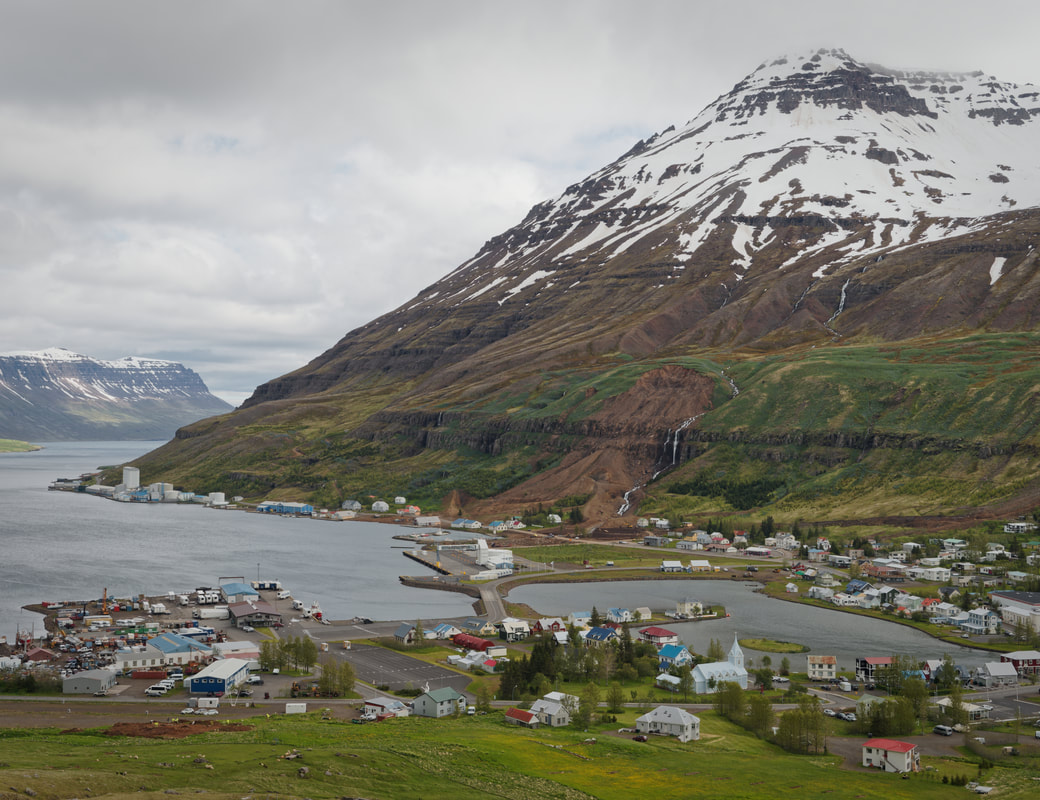
Seyðisfjörður in east Iceland is our last stop in Iceland. After that we will travel to the Faroe Islands by ferry and stay there for another 10 days. Seyðisfjörður The small town Seyðisfjörður is located between Mt. Bjólfur (1085m) and Strandartindur (1010m). The center of the town is beautifully located around the lagoon and is well known for its original early 19th-century timber houses. Bye bye Iceland After little more than three months in Iceland, it is time for us to say goodbye to this very beautiful country in the northern atlantic. It was an excellent idea and a unique opportunity to travel to Iceland during this time, because under normal circumstances, the island would have been much more crowded. During the last weeks we noticed the steadily growing tourism, so for us it is the right moment to leave the island. We will never forget being almost alone in such famous places like Skógafoss or the Geysir hot spring area.
2 Comments
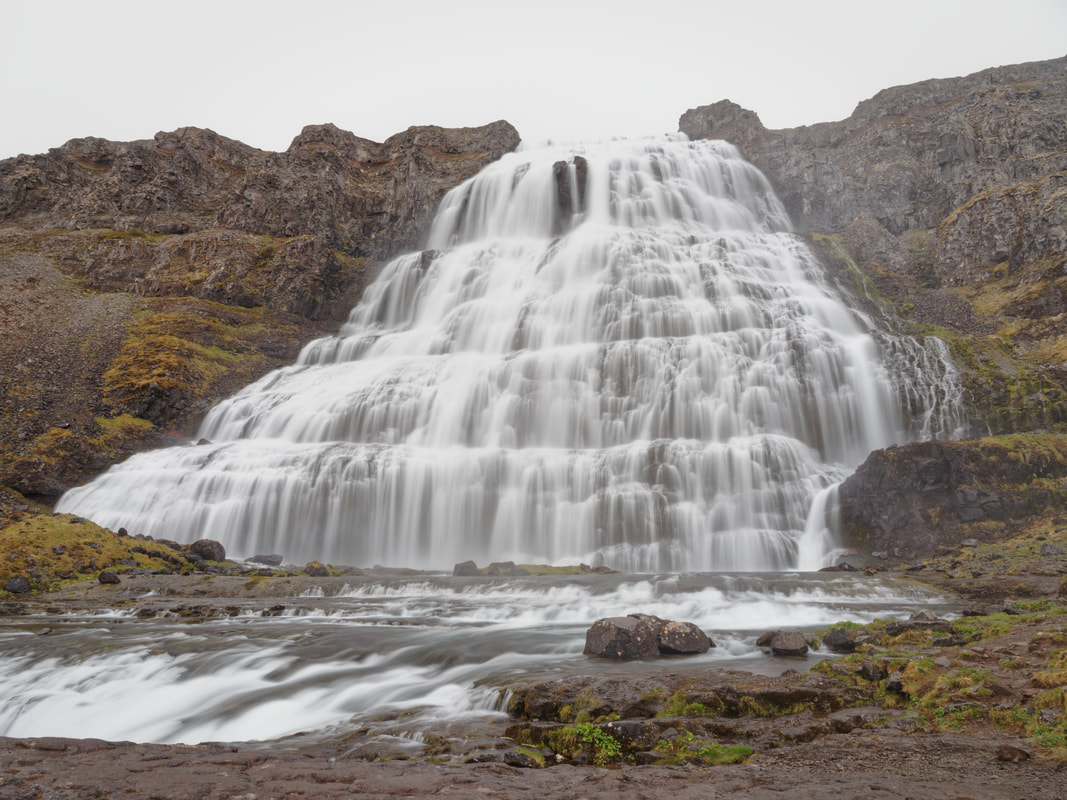
The highlands are our last longer stops in Iceland. We decided to visit two famous locations, which are accessible in mid-june by the highland bus: Þórsmörk and Landmannalaugar. Þórsmörk Þórsmörk is a nature reserve in the southern icelandic highlands, located between the glaciers Eyjafjallajökull, Mýrdalsjökull and Tindfjallajökull. The area is mainly a valley and a mountain range between the rivers Krossá, Þröngá, and Markarfljót. The spectacular landscapes with glaciers, woods and canyons make Þórsmörk a popular hiking destination. Landmannalaugar Landmannalaugar is a very unique area, both geologically and aesthetically. It is nested beside the black Laugahraun lava field, originally formed in an eruption in 1477. Landmannalaugar itself is made up of rhyolite mountains, a rock type that creates a large spectrum of glossy colours: shades of red, pink, green, blue, black, golden and yellow. Currently, it looks particularly beautiful as there are still many white snowfields in between. After crossing the Breiðafjörður by ferry, we reached the icelandic westfjords. They are one of the country's most spectacular region and very different from other parts that we have seen before. We decided to visit three locations in the southwestern part: Látrabjarg, Rauðasandur and the Dynjandi waterfall. Látrabjarg The Látrabjarg cliff is the westernmost point of Iceland and Europe. Furthermore, it is Europe’s largest bird cliff stretching 14 km and reaching a height of 441 m. The variety and sheer number of birds that can be seen in Látrabjarg are unique. At least one million of puffins nest here, often very close to the top of the cliff. Rauðasandur Rauðasandur is a long beach located near Látrabjarg. This beach is famous for its red and golden colors which are rather rare compared to the black sand beaches typical in Iceland. During summer, the beach looks somewhat tropical. Special shells are responsible for the red color, and since the Westfjords are no longer volcanically active, there is no constant source of ashy sands such as at the black sand beach near Vik at the south coast of Iceland. Dynjandi Dynjandi waterfall is located in the heart of the Westfjords. It is the biggest waterfall in this region, nearly 100 m high and 60 m wide at the bottom. Directly below Dynjandi are 6 other waterfalls which are also very beautiful. After our stops in east Iceland, we are travelling west in the northern part of Iceland. Mývatn Lake Mývatn is a lake in north Iceland. It was formed by a large basaltic lava fissure eruption about 2300 years ago. The volcanic landscape is dominated by pseudo craters. The idyllic blue lakes, hot pools, sandy mountains and volcanic craters make up an incredible setting and build various fascinating sceneries. Goðafoss Goðafoss is a waterfall in the river Skjálfandafljót, the fourth largest river in Iceland. It is one of the most spectacular waterfalls in the country, falling over a width of 30 metres from a height of 12 metres. Húsavík The town of Húsavík is located on the eastern shore of Shaky Bay and is well-known as the “Whale Capital of Iceland”. We also went out for a whale watching tour and saw a humpback whale. Húsavík is also the place where the first house of Iceland was built, back in the year 860 by the swedish viking Garðar Svavarsson. After the stop in Höfn, we are travelling further east and exploring the villages Djúpivogur and Borgarfjörður eystri with a short stop in Egilsstadir in between. Djúpivogur Djúpivogur is one of the most beautiful villages in Iceland and lies in the southeastern part of Iceland. The pyramid-shaped peak named Búlandstindur, reaching up to 1069 meters, dominates the landscape. The long history of trading lasts back to 1589, and the oldest preserved house (built in 1790) now serves as a cultural center. Shallow lagoons, coastal lakes and mudflats around the village are rich in birdlife. Borgarfjörður eystri In eastern Iceland lies the hidden treasure Borgarfjörður eystri. It is a very small village that has plenty to offer, including some legendary elfin settlements and a variety of hiking routes. In addition, the marina has the best access to puffins in Iceland, where one can observe the birds at a very short distance. We are travelling further along the south coast direction east to our next longer stop in Höfn. Skaftafell Skaftafell is a nature reserve and part of the Vatnajökull National Park in the south east of Iceland. Its location is unique as it lies between sandy beaches at the coast and inland glaciers. The region is well known for its rich flora and there are a lot of natural attractions, from cascading waterfalls to glacier lagoons and from geological formations to black sand deserts. Jökulsárlón Jökulsárlón and the nearby Diamond Beach are one of Iceland's most fantastic natural attractions. They are famous for the free-floating icebergs and the ice blocks laying on the black beach resembling diamonds glittering in the sun. Typically, thousands of people are drawn to Jökulsárlón all year round. However, COVID-19 has drastically reduced the number of visitors, and during our stay there were only a few other tourists. Höfn Höfn i Hornafjörður is a blooming village close to the biggest glacier in Europe, Vatnajökull. Höfn's growth during the 20th century from a small village to today's town was a result of the development of a diverse fishing industry. Only a few kilometers away from Höfn lays the Stokksnes peninsula and the famous Vestrahorn mountain, a popular spot especially for photographers. Before I start to write further about our Iceland trip, I think it is important to know some information about the weather conditions here: In contrast to middle Europe, spring in Iceland is very short and begins in mid-May. This means the conditions in April are often cold and can change very fast in a short time. Hveragerdi Hveragerdi is a small town in the southwest of Iceland, about half an hour from Reykjavik. It is often nicknamed as ‘the Earthquake Town’ or ‘the Hot Spring Town’, due to the active geological and geothermal forces in its region. We decided to visit this place on the way to the south coast. Vestmannaeyjar (Westman Islands) The Westman Islands, or Vestmannaeyjar, are an archipelago consisting of 15 islands and 30 rock stacks at the south coast of Iceland. They are our second stop on our trip to the south. Apart from their incredible natural beauty, the islands have the world’s largest population of nesting puffins in summer (but they aren’t still there during our stay). Vestmannaeyjar is connected by a ferry to the mainland, the crossing lasts about half an hour. After our time in the town, we decided to travel in the western part of Iceland. The area around the Snæfellsjökull national park is easily accessible all year round and not so far from the capital area. The Snæfellsnes peninsula has a lot to offer, from untouched lava fields, old volcanoes, mystical glaciers, black beaches, white beaches to hazardous cliffs along the coastline. We visited the northern coast of the peninsula and are planning to go back at the end of our trip to see the southern part as well. Grundarfjordur Grundarfjordur close to the famous Kirkjufell mountain was our first stop. We were surprised by the very cold onset of winter with strong northerly winds, but they were compensated easily by the beautiful and unique surroundings. Fortunately, the wind became a little weaker during our stay. Hellissandur Hellissandur is one of the first and oldest fishing villages in Iceland and can be traced back to the 16th century. We stayed in the former library of the village, which was an unforgettable experience. Olafsvik Olavsvik was our last stop on the peninsula. The village has a fishing harbour, and the beautiful Baejarfoss waterfall is directly behind the outermost houses. At 23 degrees 42 minutes West, Olafsvik is the westernmost settlement of its size (around 1000 inhabitants) in Europe (source: Wikipedia). Reykjavik area part II Because we have so much time for our stay in Iceland, we decided to spend some more days exploring Reykjavik and its surroundings: Hallgrimskirkja, Mosfellsbær and Akranes. The old Akranes lighthouse is a particularly recommended place to visit. Golden Circle A very popular tour which is accessible in one single day all year round from Reykjavik is the so-called “Golden Circle''. It includes some of the most famous places on the island: Gullfoss, Faxi, Geysir and Þingvellir. Under normal circumstances, we are not looking first and foremost for popular and often crowded hot spots, but during pandemics we will not miss the chance to enjoy these beauties without a crowd around us. Furthermore, the weather was so beautiful during this day, that the decision to do this tour was absolutely worth it. Reykjanes Peninsula: Garður and Sandgerði After our quarantine stay in Keflavik we explored the region near Keflavik on the Reykjanes Peninsula. Garður is at the very tip of the peninsula and provides excellent views, two famous lighthouses (the oldest and the highest one) and a long, beautiful beach. Geldingadalur volcano During the time of writing this blog entry, Iceland is popular in the world news because of the eruption of the Geldingadalur volcano, which is a fabulous nature spectacle and has grown in a very short time to an extremely popular spot. We therefore quickly realized that we won’t miss this unique experience either (the eruption site is very easy to reach from Reykjavik and lies near Grindavik on the southern peninsula of Iceland). There are no more words needed than “WOW”! It is absolutely worth the hike, and easily understandable that this volcano is so popular with the local population and the few tourists in the country. If there were no COVID-19 pandemic, this spot would probably be overcrowded - by now it is only crowded ;-). There is also installed a livecam at the eruption site: New Webcam: Livestream of Fagradalsfjall Eruption - YouTube Reykjavik area Beside the eruption site, we spent a lot of time discovering the area around Reykjavik: Seltjarnarnes, Álftanes, the small but beautiful Kermóafoss and the (reforested) wood around Elliðavatn. Every single place can be absolutely recommended to visit and is very easy to reach from the main city. |